Why Events Get Cancelled When Sponsors or Budget Fall Through
An event cancellation usually looks sudden from the outside.
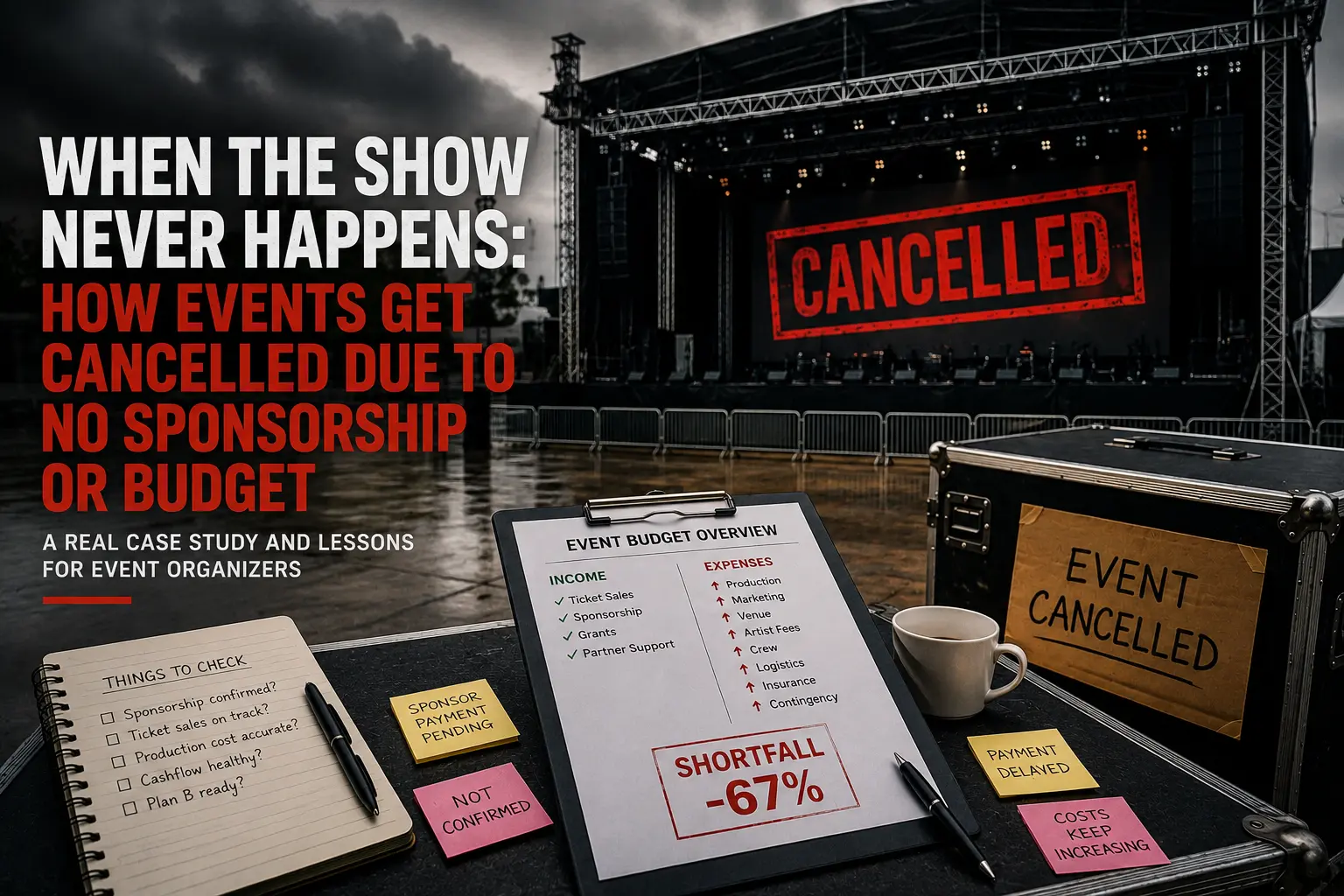
One day the poster is everywhere. The lineup looks exciting. People are tagging their friends. The next day, there is an announcement saying the event is cancelled "due to unforeseen circumstances."
But behind the scenes, most cancellations are not sudden. They are usually the result of a budget gap that has been growing quietly for weeks or months.
That is the uncomfortable part of event production: from the audience side, events are emotional. From the organizer side, events are also financial machines. If the machine is not designed properly, it can break even when the idea is good.
This is not only a Hong Kong problem. Independent events and festivals around the world have been under pressure from rising costs, weaker ticket conversion, expensive production requirements, and unpredictable sponsorship. In the UK, multiple independent festivals have cancelled or postponed because of rising energy, labour, infrastructure, and artist costs. Some reports also point to low ticket sales and tighter margins as major reasons.
So what can event organizers learn from this?
1. The uncomfortable truth: an event is a cashflow machine
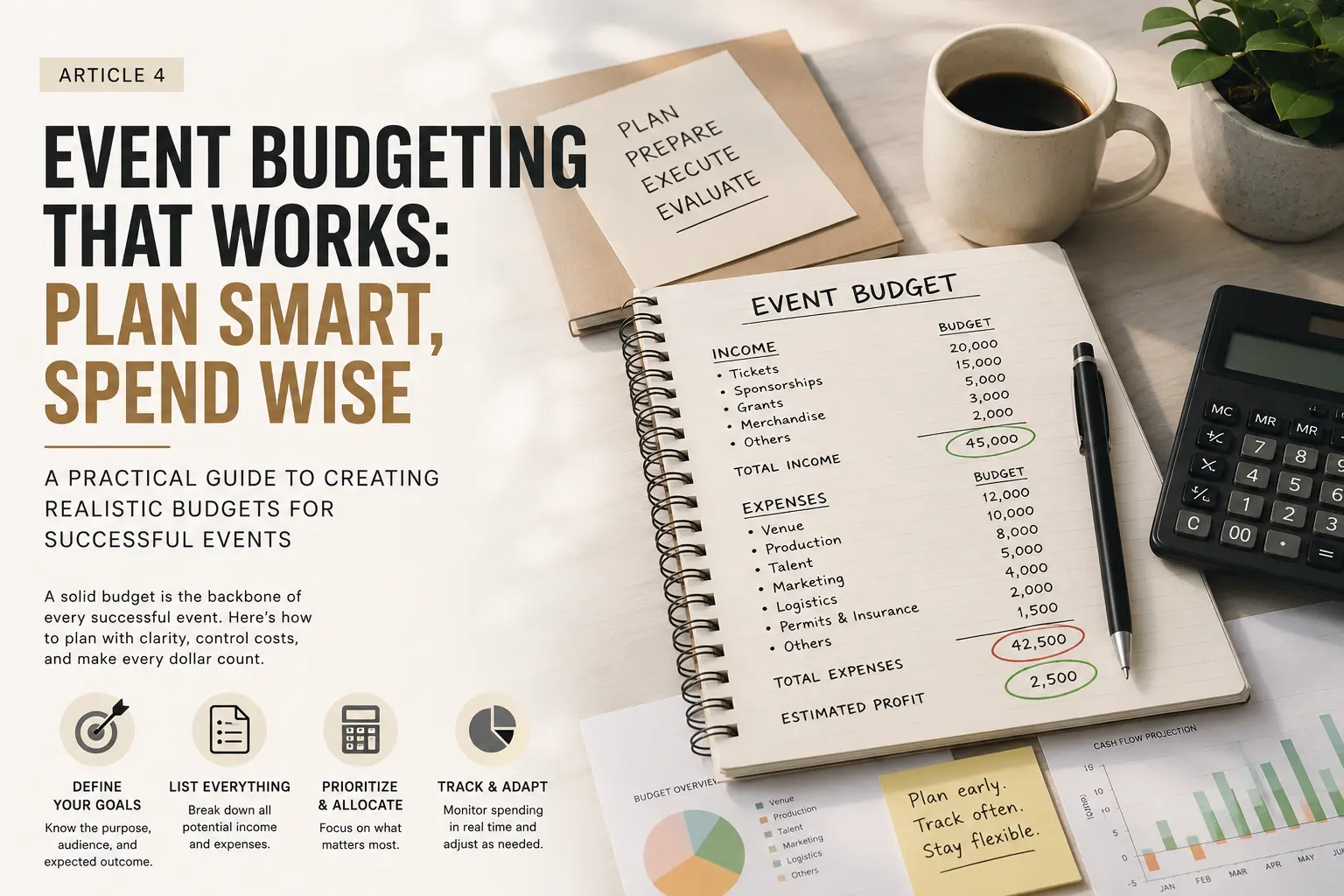
A live event spends money before it earns money.
That sounds simple, but many organizers underestimate how dangerous this timing gap can be.
Before ticket income arrives properly, an organizer may already need to pay or commit to:
This means the event can look alive publicly while still being financially fragile privately.
The poster may be ready. The venue may be on hold. The artist may be announced. But if the sponsor payment is late, ticket sales are slow, or production costs rise, the organizer may suddenly realize the event cannot continue safely.
In event planning, the dangerous question is not only:
"Can we sell this?"
The better question is:
"Can we survive if sales are slower than expected?"
2. The sponsor problem: verbal interest is not money
Sponsors can make an event possible. But sponsor conversations can also create false confidence.
A sponsor saying:
"Sound interesting."
"We are keen."
"Let's explore."
"Send us the deck."
is not the same as confirmed sponsorship.
Until there is a signed agreement, confirmed deliverables, internal approval, and a payment schedule, sponsorship should still be treated as expected income, not confirmed income.
This is where many events get into trouble. The organizer starts making decisions based on sponsor money that has not arrived yet.
Before relying on sponsor income, ask:
That last question is the painful one. But it is also the question that saves events.
3. Ticket sales can lie to you
Social media response feels good. Likes, comments, shares, and "I'm coming!" messages can make an event feel hot.
But interest is not attendance. Attendance is paid tickets.
This is one of the most important lessons in event planning.
People may love the idea and still not buy. They may wait until payday. They may wait for friends. They may forget. They may assume tickets will still be available later. They may like the artist but not the date. They may like the poster but not the price.
That is why ticket sales need milestones.
For example:
Without milestones, the organizer is not managing sales. They are just hoping.
And hope is not a budget strategy.
4. Production costs are where budgets quietly explode
Many event budgets are built around the obvious costs: venue, artist, marketing, maybe some sound and lights.
But the real cost often hides in the details.
Production cost can include:
One small change can affect many other things.
A bigger venue may need a bigger PA system. A bigger PA system may need more crew. More crew may need longer setup time. Longer setup time may increase venue hours. A larger artist rider may need extra backline, monitors, or technical staff.
This is how a "small upgrade" becomes a budget problem.
5. Why smaller events often survive better
A smaller event is not automatically less successful.
Sometimes a smaller event is smarter.
A 200-person event that is full, well-produced, and profitable is healthier than an 800-person event that looks ambitious but loses money or gets cancelled.
Smaller events can build:
There is nothing wrong with big ambition. But ambition needs staging.
Start with the version that can survive. Then scale.
Confirmed vs Expected Income
| Type | What counts |
|---|---|
| Confirmed Income | Paid ticket sales showing in the bank |
| Confirmed Income | Signed sponsorship with agreed payment date |
| Confirmed Income | Confirmed grants or signed partner contribution |
| Expected Income | Verbal sponsor interest or unofficial conversations |
| Expected Income | Social media likes, comments, or RSVPs |
| Expected Income | "Many people said they will come" |
| Expected Income | Pending sponsor approval without a firm date |
If the event only works when every optimistic assumption happens, the event is not ready yet. Build your budget on confirmed income only, and treat everything else as a bonus.
6. What organizers should do before announcing
Before putting the poster out, organizers should have a real go/no-go plan.
Use this checklist:
The best event organizers are not the ones who never dream big. They are the ones who know which dream can actually be delivered.
7. What KROMA usually advises
At KROMA, we prefer to shape the event around the real budget instead of forcing the budget to chase an oversized idea.
Sometimes that means reducing stage complexity. Sometimes it means choosing a more suitable venue. Sometimes it means simplifying the technical rider, adjusting the show format, or building the event in phases.
That may sound less glamorous at first, but it protects the most important thing: audience trust.
Because once people buy tickets, they are not only buying entry. They are trusting the organizer to deliver.
Need help with your budget planning? Explore our event consulting service or production support.