What Makes a Band Sound Good in the Live Mix?
Here is the spicy truth: a sound engineer can improve a band, but cannot fully rescue a messy band.
A good live mix is not magic. It is teamwork between the musicians, the arrangement, the stage, the room, the equipment, and the person behind the console.
Yes, the FOH engineer matters. A lot.
But if the stage is too loud, the vocals are buried, the drummer is fighting the room, the guitarist keeps turning up, the keyboard patches are all different volumes, and nobody knows what they want in the monitors, the mix will already be in trouble before the first chorus.
Live sound is a team sport.
1. The mix starts with the band, not the mixer
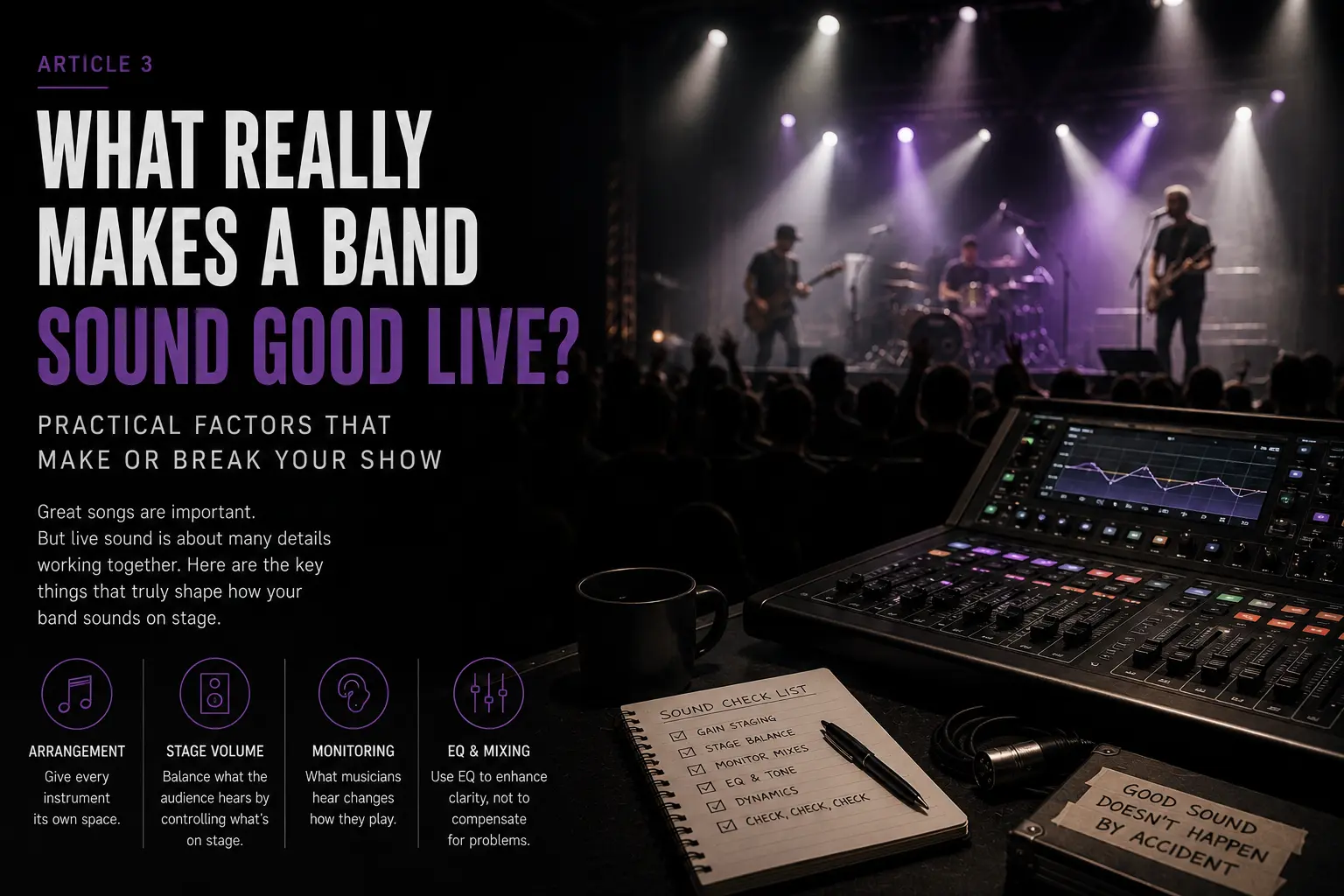
A strong live mix starts with musical arrangement.
If every instrument is fighting for the same frequency space, the mix gets crowded.
For example:
A band sounds bigger when everyone has a role.
That does not mean everyone plays less all the time. It means everyone knows when to lead, when to support, and when to leave space.
A clean arrangement makes mixing easier. A messy arrangement makes everything feel loud but unclear.
2. Stage volume: the silent killer
Stage volume is one of the biggest reasons live bands sound messy.
If guitar amps, drums, bass amps, wedges, and stage spill are already too loud, the FOH engineer has less control over what the audience hears.
Here is the brutal version:
If the stage is already louder than the PA, the sound engineer is no longer mixing. They are negotiating with physics.
Too much stage volume causes:
Controlling stage volume does not mean making the band weak. It means giving the PA system room to do its job.
3. Monitoring changes performance
Musicians play differently depending on what they hear.
If the vocalist cannot hear pitch, pitch suffers.
If the drummer cannot hear bass or click, groove suffers.
If the guitarist cannot hear vocal, they may overplay.
If everyone asks for "more me" in the wedge, the stage gets louder and the mix gets worse.
Good monitoring is about priorities.
A vocalist may need vocal, keys, and a little guitar. A drummer may need bass, click, and lead vocal. A bassist may need kick, vocal, and keys. Not everyone needs everything equally loud.
Monitor discipline is a skill.
The best musicians know what they need to perform well, not just what makes them feel loud.
4. Gain structure: clean signal before loud signal
Gain structure sounds technical, but the idea is simple.
Every signal should enter the system at a healthy level: not too weak, not distorted, not noisy.
If the input gain is too low, the engineer may need to boost later and bring up noise.
If the input gain is too high, the channel may distort before the fader even moves.
Good gain structure helps the mix feel:
Loud is not the same as good. Clean first, loud later.
5. EQ is about space
One common beginner mistake is making every channel sound impressive on its own.
Huge kick. Huge bass. Huge guitar. Huge keys. Huge vocals. Huge reverb.
Then everything plays together and suddenly it sounds like soup.
EQ is not only for making things bigger. It is for making things fit.
Useful EQ decisions include:
A good mix is not a collection of impressive solo channels. It is a balanced picture.
6. Compression and effects should support emotion
Compression can help control dynamics. Reverb can create space. Delay can add depth. Effects can make a vocal feel more polished.
But too much processing can make a band feel smaller, not bigger.
If every vocal has too much reverb, words become unclear. If every drum is heavily compressed, the groove can feel flat. If the mix is too processed, the human energy disappears.
Effects should support the performance, not cover it.
7. Rehearsal matters more than gear
A band that rehearses well will usually sound better than a band with expensive gear but poor preparation.
Good bands prepare:
This is why rehearsal is not only about playing the songs. Rehearsal is where the band builds the show.
8. Practical checklist before a show
- Input list
- Stage plot
- Monitor priorities
- Playback/click requirements
- Reasonable amp volume
- Tuned drums
- Spare cables and batteries
The easier the band makes it for the production team, the more time everyone has to make the show sound good.
Need rehearsal space or live sound support? Book KROMA Studio or explore live production support.
9. How KROMA supports better band sound
KROMA supports bands from both sides: rehearsal space and live production.
That means we understand the preparation side and the show-day side.
If the band rehearses better, communicates better, and gets the right audio setup, the final mix has much more room to breathe.
A good show does not start when the doors open. It starts in rehearsal.